

Table of Contents
- Sewing Patterns for Sustainable Fashion: What Changed in 2026
- Zero-Waste Sewing Patterns and Fabric Scrap Solutions
- How to Choose a Sewing Pattern Size for the Perfect Fit
- Beginner-Friendly Garment Sewing Patterns for 2026
- Versatile Wardrobe Sewing Patterns for Year-Round Wear
- Seasonal Sewing Ideas: Spring, Summer, Fall, and Winter Projects
- Choosing Sustainable Fabrics for Your Handmade Wardrobe
- Conclusion: Build Your Sustainable Wardrobe with Indie Patterns
- Frequently Asked Questions
Last Updated: October 5, 2026
Sewing Patterns for Sustainable Fashion: What Changed in 2026
Sustainable fashion isn't a trend, it's how makers approach every project. In 2026, home sewers build intentional wardrobes through sewing patterns for sustainable fashion 2026.
The real change this year is treating pattern selection and fabric choice as interconnected. This guide covers the patterns and practices that matter most.
Zero-Waste Sewing Patterns and Fabric Scrap Solutions
Zero-waste sewing patterns have moved from niche to mainstream among home sewers who want every scrap to serve a purpose. The sustainable fashion research examining SDG alignment shows that reducing material waste is a core pillar of sustainable garment production.
The Zero Waste Poof PDF Pattern from Modern Sewing Co. ($10.00) turns fabric scraps into a storage pouffe while teaching piping, zip insertion, and baste stitches in heavier fabrics like denim or canvas.

The Market Tote & Produce Bag PDF Pattern ($11.00) from The Green Pepper Patterns uses leftover yardage. It includes three sizes for market totes and mesh produce bags, ideal for remnants and a reusable alternative to single-use packaging.
How to Choose a Sewing Pattern Size for the Perfect Fit
Getting the right size matters more than the pattern brand.
Identify which measurements matter: bust and waist for fitted dresses and tops, waist and hip for skirts and trousers.
Compare your body measurements to the finished garment measurements, then account for ease, the extra room built into the pattern. The Elastic Waist Maxi Skirt has roughly 30cm of ease at the waist.
Write down your key measurements before shopping. Many indie brands now include detailed size charts and finished measurements, making fit easier to predict.
Beginner-Friendly Garment Sewing Patterns for 2026
Starting with the right pattern builds confidence. Beginner-friendly patterns feature straightforward construction, fewer pieces, and minimal fitting adjustments, so you learn fundamental techniques without overwhelming complexity.
The Elastic Waist Maxi Skirt is rated "very easy" and works beautifully for first garments, requiring only straight seams, elastic insertion, and simple topstitching. Its generous ease makes fit forgiving.
For more challenge, the Maisie Overalls ($24.50) from Juliana Martejevs is a wearable project in about 6 hours.
The Frida Denim Skirt ($24.50) introduces zipper installation and waistband techniques in a classic midi design.

Versatile Wardrobe Sewing Patterns for Year-Round Wear
Building a sustainable wardrobe means choosing patterns that work across seasons and pair with multiple pieces. Versatile patterns form the foundation of a capsule wardrobe, a curated collection that mixes and matches endlessly.
The Isle High-Waisted Stretch Denim Pattern from Chalk + Notch ($32.00) offers two views, fitted flare and relaxed wide leg, with six waist darts across sizes 0-30, plus front and back patch pockets.

For menswear, the Five Pocket Jeans from Wardrobe by Me ($34.00) captures classic denim styling in sizes 26" to 42".
| Pattern | Best For | Skill Level | Wear Season | Price |
|---|---|---|---|---|
| Isle High-Waisted Denim | Year-round bottoms | Intermediate | All seasons | $32.00 |
| Five Pocket Jeans (Men's) | Classic menswear | Intermediate | All seasons | $34.00 |
| Elastic Waist Maxi Skirt | Relaxed everyday wear | Very Easy | All seasons | $36.00 |
| Building the Pattern book | Capsule wardrobe foundation | Beginner-Intermediate | All seasons | $49.00 |
Seasonal Sewing Ideas: Spring, Summer, Fall, and Winter Projects
Seasonal sewing only supports sustainability when a garment survives more than one season. The practical test: can a pattern be made in at least two fabric weights and worn across two temperature bands? That's the filter below.
Sort your wardrobe by how many months per year you actually wear each piece. Patterns that can be re-cut in a different fabric weight for a different season earn their place in a sustainable rotation.
Spring and Summer: Lightweight, Breathable, Repairable
Warm-weather sewing rewards loose silhouettes and simple construction. Look for:
Zero Waste Poof PDF Pattern - Modern Sewing Co. →
- Fewer than six pattern pieces for a full garment
- No lining, or an optional lining view
- Straight or gently curved seams rather than complex princess seams
- Enough ease that a small weight change does not retire the garment
Fabric weights that work: light linen (around 150-200 gsm), cotton lawn, cotton poplin, and lightweight hemp blends. The Elastic Waist Maxi Skirt reads as summer in linen and transitional in midweight cotton twill; the Frida Denim Skirt works in lighter cotton for warm months and heavier twill for early fall, exactly the two-season test.
Fall and Winter: Layering, Structure, and Longevity
Cold-weather sewing is where durability matters most. Prioritize:
- Patterns with reinforced stress points (bar tacks at pocket openings, double-stitched waistbands)
- Designs that allow a lining to be added later without re-cutting the shell
- Fabrics with a tight weave that resist pilling and abrasion
Fabric weights that work: midweight denim (10-12 oz), corduroy, wool blends, and heavier linen or hemp canvas for structured jackets. The Isle High-Waisted Denim and Five Pocket Jeans hold up across fall and winter in midweight denim and can be re-made lighter for spring.
The Two-Season Rule
Before committing to a seasonal project, ask whether the same pattern could be made again in a different fabric weight for a different season. If not, it's a one-season garment, fine, but deliberate. Patterns that pass the two-season test tend to be simple, loose, and free of trend-specific details.
Care and End-of-Season Storage
How you store a garment between seasons affects how many seasons it survives. Clean natural fibers before storage, fold rather than hang where possible, and keep them out of direct light. Cedar or lavender sachets deter moths without synthetic pesticides, and breathable cotton bags prevent mildew-causing moisture.
A garment stored well and repaired promptly typically lasts several years longer than one worn hard and stored poorly.
Choosing Sustainable Fabrics for Your Handmade Wardrobe
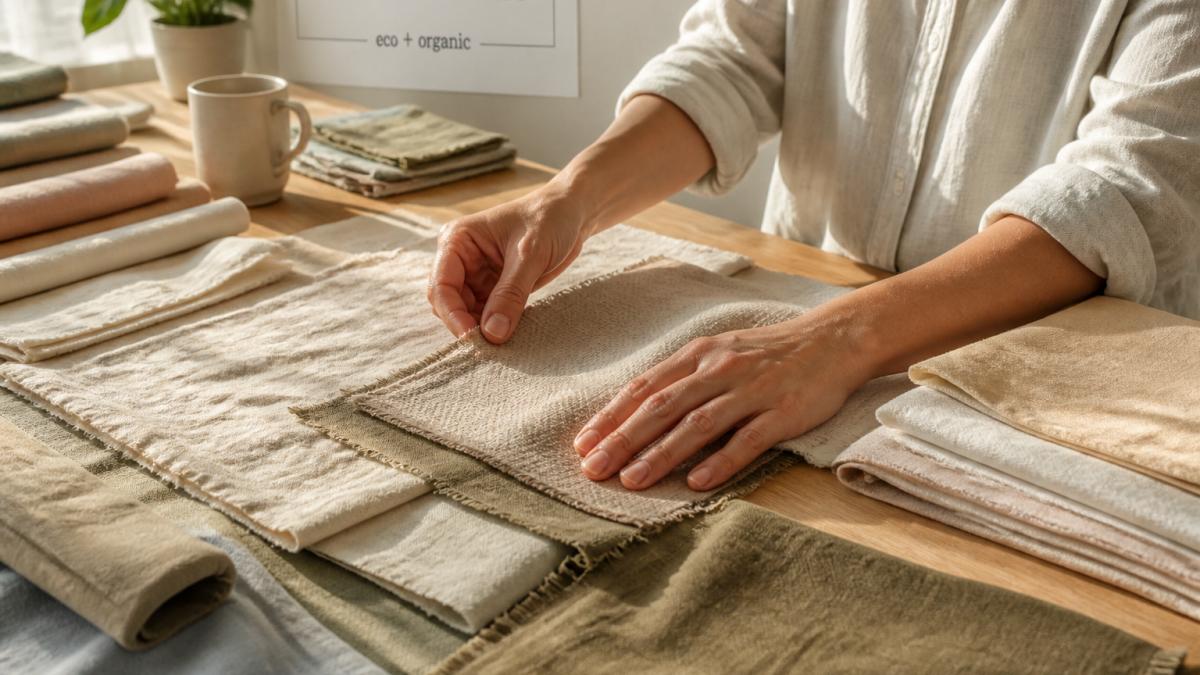
Fabric choice is where most sustainability claims in sewing hold up or fall apart. The framework below judges fabrics on the criteria that actually move the needle.
Five Criteria for Judging a Fabric
- Fiber origin, Is the fiber plant-based, animal-based, or synthetic? Plant-based fibers like linen, hemp, and organic cotton are renewable and biodegradable. Regenerated cellulose fibers like Tencel lyocell come from wood pulp in a closed-loop process that recovers most of the solvent. Conventional polyester and nylon are petroleum-derived and shed microplastics during washing.
- Processing intensity, How much water, energy, and chemistry does the fiber require? Linen and hemp need relatively little irrigation and few pesticides. Conventional cotton is water-intensive; organic cotton avoids synthetic pesticides but still uses significant water. Bamboo is often marketed as sustainable, but unless it is lyocell-processed, the viscose route uses harsh chemicals.
- Durability, Will the fabric survive repeated washing and wear? Tightly woven linen, hemp canvas, and midweight denim outlast loose knits and lightweight lawns by a wide margin. Durability is an important sustainability metric because it directly determines how many wears a garment delivers.
- Repairability, Can the fabric be patched, darned, or re-sewn? Wovens with a visible weave are easier to repair invisibly than fine knits or fabrics with a printed surface that will not match a patch.
- End-of-life, Will the fabric biodegrade, or will it persist? Untreated natural fibers biodegrade. Blends that mix natural and synthetic fibers are difficult to recycle and slow to break down.
Matching Fabric to Pattern
Fabric weight and drape determine whether a pattern works. A pattern drafted for a stable woven will hang poorly in a fluid knit, and a pattern drafted for a knit will pull and distort in a woven. Before buying fabric, check the pattern's recommended fabrics and the finished garment measurements.
| Pattern type | Recommended fabric weight | Lower-impact options |
|---|---|---|
| Relaxed skirts and trousers | 150-250 gsm | Linen, hemp blends, organic cotton twill |
| Fitted jeans and jackets | 280-400 gsm | Midweight denim, hemp canvas, corduroy |
| Tops and blouses | 100-180 gsm | Cotton lawn, Tencel lyocell, lightweight linen |
| Layering pieces | 200-350 gsm | Wool blends, heavy linen, hemp canvas |
Sourcing and Traceability
Where a fabric comes from matters as much as what it's made of. Look for mills and suppliers that publish fiber origin, certification (GOTS for organic cotton, OEKO-TEX for chemical safety), and mill location. Regional mills and deadstock suppliers reduce transport footprint.
Deadstock and remnant fabric is one of the most accessible lower-impact options for home sewers. It diverts material that would otherwise be discarded. The trade-off is limited quantity and inconsistent color matching, better suited to one-off garments than a coordinated capsule.
Care as Part of the Lifecycle
How you wash and dry a garment affects its footprint. Cold water, air-drying, and washing less often extend garment life and cut energy use. Natural fibers tolerate cold washing well; wool needs hand-washing or a wool cycle to prevent felting. Storing garments clean and folded and repairing small holes early are habits that extend wearable life.
research on sustainable fashion through the lens of development goals emphasizes that material choice directly impacts a garment's environmental footprint across its entire lifecycle, which is why the criteria above focus on durability and end-of-life, not just fiber origin.
Conclusion: Build Your Sustainable Wardrobe with Indie Patterns
Creating a sustainable wardrobe through sewing starts with intentional pattern selection and fabric choices. Whether you begin with a simple elastic-waist skirt or advance to fitted denim jeans, indie sewing patterns offer flexibility and quality.
Simplifi Fabric makes this journey accessible by offering carefully curated indie sewing patterns alongside ethically sourced sustainable fabrics.
Shop Now at Simplifi Fabric and start your sustainable sewing journey with patterns and fabrics that matter.
Frequently Asked Questions
What makes a sewing pattern sustainable?
A sustainable sewing pattern encourages you to create garments you'll wear regularly and repair over time, reducing waste. Patterns designed for zero-waste cutting or upcycling, like the Zero Waste Poof PDF Pattern, minimize fabric scraps. Sustainable patterns also work with natural, ethically sourced materials like organic cotton, linen, and hemp, ensuring your finished garment aligns with eco-conscious values from fabric selection through construction.
How do I choose the right size in an indie sewing pattern?
Always measure your bust, waist, and hip circumference, then compare to the pattern's size chart before purchasing. Indie patterns like The Frida Denim Skirt and The Maisie Overalls offer multiple sizes (XS-XXXL) with detailed measurements in centimetres. Check the pattern's ease allowance, how much extra room is built in, as this affects how the finished garment will fit. Many indie designers provide fit notes and model photos to help you visualize the silhouette on different body types.
Are indie sewing patterns beginner-friendly?
Yes, many indie patterns cater to beginners. The Market Tote & Produce Bag PDF Pattern is rated 'Quick & Easy' and ideal for first-time sewers. Patterns like the Elastic Waist Maxi Skirt are marked 'Very Easy' and require no advanced techniques. However, some indie patterns, like the Five Pocket Jeans, target intermediate or advanced sewers. Always check the skill level and construction techniques listed before buying to ensure the pattern matches your experience.
What fabrics work best for sustainable sewing patterns?
Natural, ethically sourced materials create the most sustainable garments. Organic cotton, linen, hemp, bamboo, and Tencel are excellent choices that biodegrade and require fewer chemicals in production. For denim patterns like The Frida Denim Skirt, look for stretch denim made with organic cotton and minimal elastane. The Zero Waste Poof pattern works best with heavier, durable fabrics that you'll enjoy using for years. Choosing high-quality, natural fabrics ensures your handmade pieces last longer and remain truly sustainable.
Can I make sustainable clothes from fabric I already own?
Absolutely. Upcycling and using fabric from your stash is one of the most sustainable sewing practices. The Frida Denim Skirt pattern explicitly supports this, you can cut up old denim pants and use patchwork techniques to create new fabric for the skirt. The Market Tote & Produce Bag pattern encourages using leftover yardage from your collection. This approach eliminates new fabric purchases, diverts textile waste from landfills, and creates uniquely personalized garments with stories behind them.