

Table of Contents
- Why Organic Cotton Matters for Your Sewing Projects
- Pre-Washing Organic Cotton Fabric: The Essential First Step
- Selecting the Best Needles for Organic Cotton
- Sustainable Sewing Thread Options for Organic Cotton
- Mastering Tension and Stitch Settings
- Cutting, Pinning, and Fabric Handling Techniques
- Eco-Friendly Interfacing and Stabilizer Alternatives
- Troubleshooting Common Machine Issues With Organic Cotton
- Frequently Asked Questions
Last Updated: September 27, 2026
Why Organic Cotton Matters for Your Sewing Projects
At Simplifi Fabric, we've curated a selection of GOTS-certified organic textiles specifically chosen for makers who care about their environmental impact without compromising on quality. But here's what most guides miss: tips for sewing with organic cotton require a different approach than conventional fabrics. The fiber behaves differently during pre-washing, responds to needle selection in specific ways, and demands adjusted tension settings on most machines. This guide covers the practical techniques that turn organic cotton from a sustainable choice into a genuinely rewarding sewing experience.

Pre-Washing Organic Cotton Fabric: The Essential First Step
Pre-washing is non-negotiable with organic cotton. The fabric will shrink, and skipping this step means your finished garment won't fit as intended.

How Much Shrinkage to Expect
Organic cotton typically shrinks 3-5% when pre-washed. This is predictable and manageable once you know what to expect. The shrinkage happens primarily in length, though width can shift slightly depending on the weave. According to Portugal Clothing Factory's sustainable fabrics guide, organic cotton production methods preserve more of the fiber's natural structure, which is why shrinkage is consistent and predictable.
Washing Method for Different Weights
Lightweight fabrics (voile, lawn):
- Use a delicate cycle at 30°C with low spin
- Wash on its own the first time
- Air dry to prevent creasing
Medium-weight fabrics (quilting cotton, poplin):
- Gentle cycle at 40°C with low spin
- Can wash with similar colors after first wash
- Tumble dry on low heat or air dry
Heavy-weight fabrics (twill, denim):
- Use a standard cycle at 40°C
- Pre-soak the fabric in water before washing to help it absorb evenly
- Wash on its own for the first wash to prevent white creases from forming
- Tumble dry on low heat
Selecting the Best Needles for Organic Cotton
The right needle prevents skipped stitches, puckering, and thread breakage when sewing organic cotton.
Universal vs. Ballpoint Needles
Use universal needles for most organic cotton wovens; they have a slightly rounded tip that penetrates smoothly. Switch to ballpoint needles only for organic cotton knits and stretch fabrics, where the rounded tip prevents laddering.
Needle Size and Weight Matching
Needle size must match fabric weight. Too fine a needle bends or breaks. Too coarse a needle creates visible holes.
- For lightweight fabrics, a smaller needle size is generally recommended.
- For medium-weight fabrics, a mid-range needle size is often suitable.
- For heavy-weight fabrics, a larger needle size is typically needed.
Start with a fresh needle before each project. Organic cotton fibers are less refined than conventional cotton, so a dull needle won't penetrate cleanly.

Sustainable Sewing Thread Options for Organic Cotton
The thread you choose matters as much as the fabric. Organic cotton thread keeps your garment biodegradable and aligned with your sustainability goals.
Colonial 100% Organic Cotton Thread is GOTS-certified and made in Europe, available in multiple colors for machine sewing and quilting.
Organic cotton thread has lower seam strength compared to synthetic polyester threads, according to research on seam performance and biodegradability from the National Center for Biotechnology Information. This doesn't mean it's weak, it means you need to use proper tension and stitch length to maximize durability.
Mastering Tension and Stitch Settings
Tension problems are the most common issue when sewing organic cotton. Sew a test seam on a scrap folded in half and check both sides: if top thread shows on bottom, tension is too tight; if bottom thread shows on top, tension is too loose. Most machines need slightly looser tension for organic cotton than conventional cotton.
Preventing Puckering and Skipped Stitches
To prevent puckering, use 2.5mm stitch length, decrease tension by half a setting, use a fresh appropriately-sized needle, and check presser foot pressure. Skipped stitches usually stem from a dull needle, wrong needle size, tight tension, or incorrect threading. Test on scraps before cutting.
Cutting, Pinning, and Fabric Handling Techniques
Organic cotton is forgiving to work with once you understand its behavior. The key is respecting the grainline, understanding how the fabric's natural fibers influence drape, and matching your pattern choice to the specific weight and weave structure of your fabric.
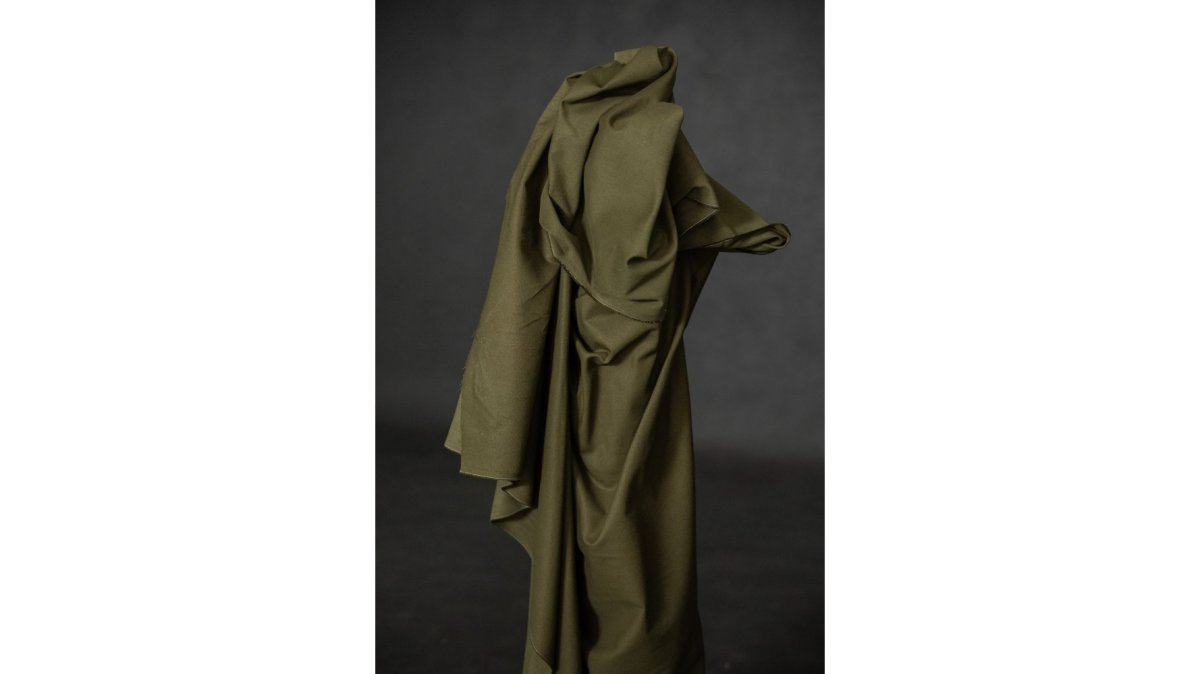
12oz Organic Cotton Sanded Twill →
Working With Grainline and Selvedge
Always follow the grainline indicated on your pattern. Trim away the selvedge before cutting, as it's denser and can cause puckering. Pin generously perpendicular to cutting lines, or use pattern weights for lightweight fabrics to prevent shifting and marking.
Pattern Selection and Ease Adjustments Based on Fabric Weight
Fabric weight changes how patterns drape, fit, and how much ease (extra room) you need to build in.
Lightweight organic cotton (voile, lawn): Best for loose, flowing silhouettes. Add 2-3 cm extra ease at bust and waist; use 1 cm seam allowances to reduce fraying. Test fit before hemming.
Medium-weight organic cotton (quilting cotton, poplin): Versatile for most garments. Follow pattern ease recommendations as written and use standard 1.5 cm seam allowances.
Heavy-weight organic cotton (twill, denim): Perfect for structured jackets and pants. Reduce ease by 1-2 cm, use 1.5-2 cm seam allowances, and allow up to 5% shrinkage before cutting. Use a walking foot to prevent layer shifting.
Understanding Organic Cotton Weave Structure and Its Impact on Fit
Organic cotton's weave can influence its stretch across the bias. For woven fabrics with close fits, consider adding ease at bust and hip. Organic cotton knits have good recovery. If working with organic cotton denim, allow for some shrinkage in the first few wears; consider cutting trousers slightly longer than desired inseam.
Eco-Friendly Interfacing and Stabilizer Alternatives
Organic interfacing alternatives perform beautifully when you understand how they differ from conventional fusible interfacing.
Natural Fiber Interfacing Options and Their Applications
Organic cotton interfacing: Best for lightweight blouses and dresses. Maintains soft hand feel, available in light/medium/heavy weights, and requires lower heat (120-130°C) for fusible versions.
Pressing and Application Techniques for Natural Fiber Interfacing
Use lower heat for natural fiber interfacing. Always test on scraps first. Press with steam using a pressing cloth; use lifting motions rather than sliding. For organic cotton garments, sew-in interfacing can maintain breathability.
Troubleshooting Natural Fiber Interfacing Problems
Bubbling after washing: Re-press with steam; if it persists, switch to sew-in interfacing. Too stiff: Use lighter weight or reduce application. Showing through: Use lighter weight or apply sew-in interfacing only to seam allowances. Always test on scraps first.
Sustainable Stabilizers for Quilting and Embroidery
For quilting projects, organic cotton batting can be a sustainable choice. Your finished quilt can remain biodegradable and align with your commitment to sustainable sewing.
Troubleshooting Common Machine Issues With Organic Cotton
Most problems arise from tension, needle choice, or thread mismatch. Here's how to diagnose and fix them.
| Problem | Likely Cause | Solution |
|---|---|---|
| Skipped stitches | Dull needle, wrong size, or tight tension | Replace needle, check size matches weight, loosen tension |
| Puckering | Tension too tight or stitch too short | Loosen tension by half setting, increase stitch length to 2.5mm |
| Thread breakage | Tension too tight or lint buildup | Decrease tension, clean bobbin area and needle plate |
| Uneven stitches | Presser foot pressure incorrect | Adjust pressure for lightweight or heavy fabrics per manual |
| Fabric bunching | Threading error or needle bent | Rethread machine, replace needle |
Frequently Asked Questions
How much shrinkage should I expect when pre-washing organic cotton fabric?
Organic cotton typically shrinks up to 5% when pre-washed, depending on the fabric weight and weave. Lightweight voiles may shrink slightly less, while heavier twills can reach the full 5% range. Always pre-wash your fabric before cutting your pattern to account for this shrinkage. Use cool water (30-40 degrees) with a gentle cycle and non-bio detergent to minimize additional shrinkage after garment completion.
What type of needle is best for sewing organic cotton?
Universal needles work well for most organic cotton projects, but ballpoint needles are better for knits and ribbed fabrics because they slide between fibers rather than piercing them. Match your needle size to fabric weight: use a smaller size for lightweight fabrics, a mid-range size for medium-weight fabrics, and a larger size for heavier fabrics. Change your needle regularly to prevent skipped stitches and puckering.
Is organic cotton thread better than synthetic polyester thread?
Organic cotton thread offers environmental benefits and biodegradability, making it ideal for eco-conscious makers. However, synthetic polyester threads typically provide stronger seams, which is important for garments that need durability. GOTS-certified organic cotton thread is a sustainable choice for quilting and general sewing, though you may want to reinforce stress points with polyester for frequently-worn clothing. Colonial 100% Organic Cotton Thread is GOTS-certified and works beautifully for quilting and machine sewing projects.
What tension settings should I use for organic cotton fabric?
Start with your machine's standard tension setting and test on fabric scraps first. Organic cotton, especially lightweight voiles, can pucker if tension is too tight. If you notice puckering, reduce tension slightly (usually by 0.5 points). If stitches skip, increase tension gradually. Presser foot pressure also matters: reduce pressure for delicate fabrics and increase it for heavier twills. Always test tension adjustments on the same fabric weight you're using for your project.